
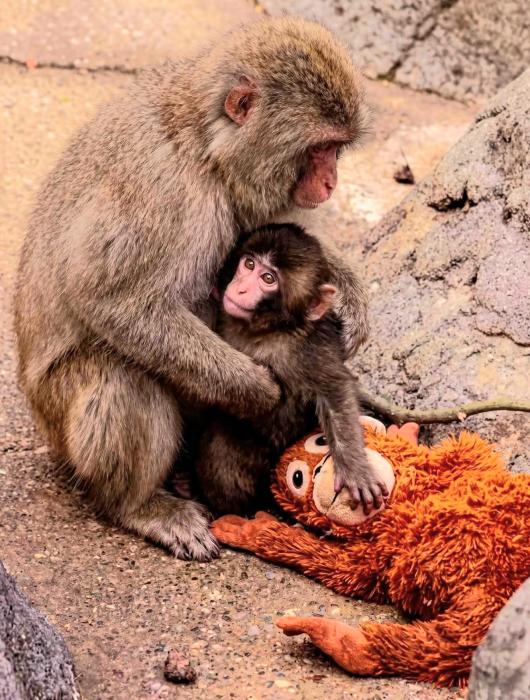
NARASINETWORK.COM - In a quiet corner of Ichikawa City Zoo, a small Japanese macaque was born with little fanfare. The infant, named Punch, was small and weak, and rejected by her mother within days of birth. For newborn primates, rejection carries clear risks; young macaques need warmth, security and physical contact to survive.
Zoo keepers provided care for the infant. They fed Punch on a regular schedule, kept her safe, and gave her a simple stuffed orangutan toy. At the time, the toy’s importance to her development wasn't foreseen.
Punch became attached to the toy. She slept with it each night, carried it wherever she went, and pressed her face against it when she seemed anxious.
Zoo visitors noticed the young macaque and her constant companion. Images of Punch holding the toy spread across social media. People in various locations responded to the scenes, recognising the infant’s need for comfort and her steady approach to coping.
As time passed, Punch started to approach other macaques in the troop. Initially, the other animals kept their distance, and Punch held the toy firmly, appearing unsure of her place in the group.
On one occasion, several troop members moved close to Punch and gently groomed her fur. The infant paused, then slowly loosened her hold on the stuffed toy. For the first time, she leaned into live social contact instead of relying on the object for comfort.
The moment marked a clear change in Punch’s integration with the group. Her story has connected with many people, showing straightforward points about resilience and connection: comfort can come from unexpected places, progress starts with small actions, and acceptance is possible after initial rejection.
Punch has since established her position within the macaque troop, moving beyond the online attention she received.